The "Agentic" Office: A Guide to the New Workforce within Microsoft 365
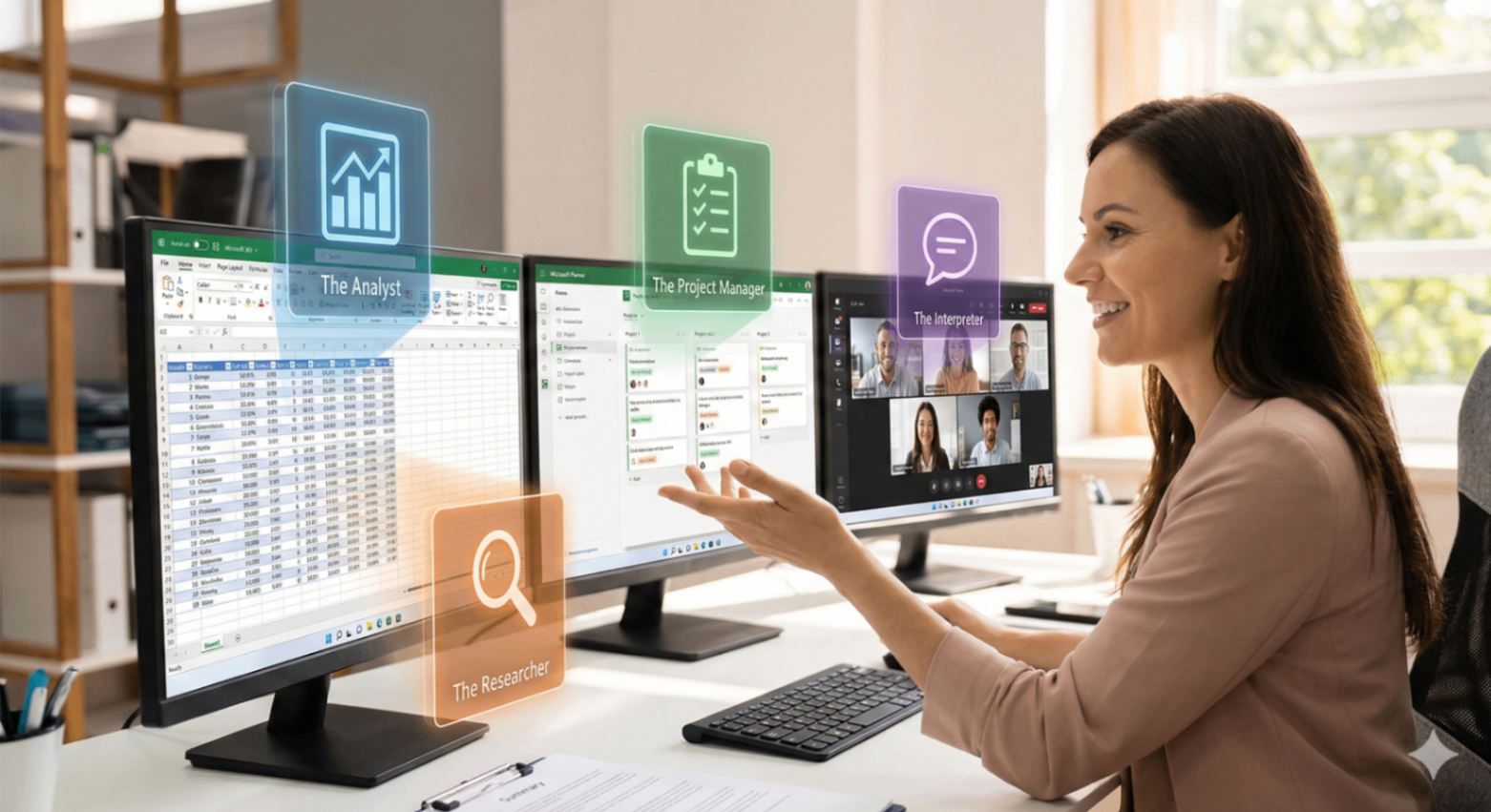
If you opened your Outlook or Teams this morning, you likely didn't just see messages from your human colleagues. You saw status updates from your Researcher, a draft from your Analyst, and a meeting recap from your Facilitator.
In 2026, Microsoft 365 has moved beyond being a "suite of tools." It is now a coordinated ecosystem of AI agents. Here is a breakdown of the different types of "silicon coworkers" currently running in the background of most modern enterprises.
1. The "Ready-to-Work" Built-in Agents
Microsoft has deployed a fleet of specialized, out-of-the-box agents designed for the core pillars of office work. These are no longer just "features"; they have their own identities and persistence.
The Analyst: Grounded in Excel and Power BI, this agent doesn't just make charts. It monitors data streams for anomalies and proactively pings you when a trend shifts.
The Researcher: Operating within Microsoft 365 Copilot Chat, it synthesizes internal documents and web data to create deep-dive briefings.
The Interpreter: A staple in global Teams calls, providing real-time, high-fidelity speech-to-speech translation in nine languages.
The Project Manager: This agent lives in Microsoft Planner, autonomously assigning tasks based on meeting transcripts and tracking "blockers" before they become crises.
2. Role-Specific Powerhouses
For specialized departments, Microsoft 365 now integrates "Vertical Agents" that connect to external CRM and ERP systems.
Copilot for Sales: Acts as a 24/7 lead-qualification engine, drafting follow-ups and summarizing opportunity history from Dynamics 365 or Salesforce.
Copilot for Finance: Automates reconciliation and report generation, often catching arithmetic errors that human eyes miss during late-night audits.
The People Agent: A 2026 breakout star, this agent helps you navigate your own company. It knows who has specific skills, who reports to whom, and helps you prepare for meetings by summarizing your past interactions with any individual.
3. Custom & Autonomous Agents (Copilot Studio)
The biggest shift this year has been the democratization of "Agent Building." Using Copilot Studio, even non-technical employees are now "Agent Bosses."
Agent TypeFunctionAutonomy LevelDeclarative AgentsSpecialized versions of Copilot grounded in specific SharePoint folders.Low (Instruction-based)Custom Engine AgentsBuilt from scratch for complex, proprietary business logic.Medium (Task-specific)Autonomous AgentsProactive agents that trigger themselves based on external signals (e.g., an inventory drop).High (Self-starting).
4. The "Work IQ" Layer
What makes the 2026 agents different from the "bots" of 2024 is Work IQ. This is Microsoft’s new organizational memory layer. It ensures that your agents don't just "reset" after every chat. They remember your preferences, your project history, and the specific jargon of your industry, making them feel less like software and more like a long-term assistant.
The Governance Frontier: Agent 365
With "fleets" of agents running around, IT departments have pivoted to Agent 365, a management platform that treats every AI agent as a first-class identity. This allows companies to set "permissions" for AI—ensuring your Research Agent can’t accidentally read the HR payroll files.
"In 2026, the question isn't 'Do you use AI?'" says a Microsoft Lead Architect. "The question is 'How well do your agents collaborate with your people?'"